
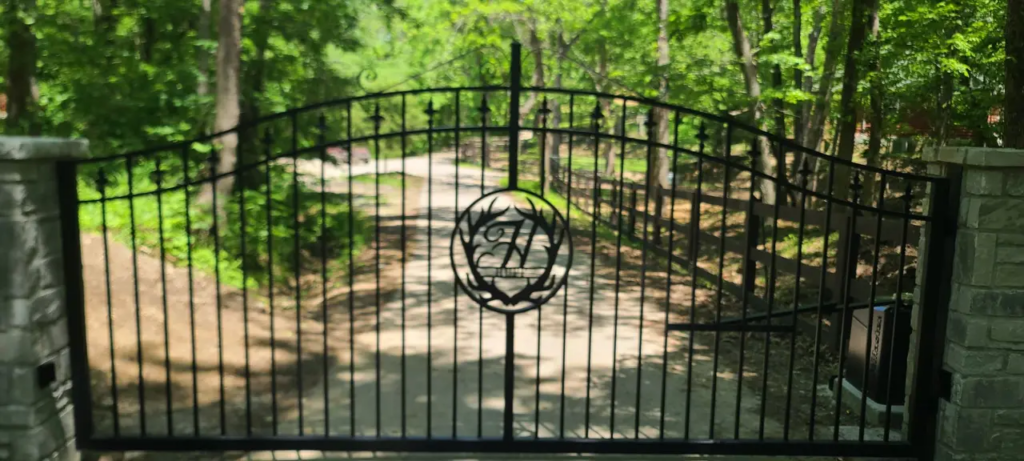
Iron Security Fencing That Protects Without Feeling Fortress-Like
Most people who call me about iron security fencing say some version of the same thing: “I want to feel safe, but I don’t want my house to look like a compound.” I get it. Nobody wants to pull into their driveway and feel like they’re checking into a prison. The good news is you don’t have to choose. After nearly three decades of building ironwork in Broken Arrow, I can tell you the fences that make people feel the safest are usually the ones that don’t shout about it.
Here’s how I think about getting real protection and a property that still looks like a home.
What Iron Security Fencing Really Means
When I say iron security fencing, I’m not talking about razor wire or ten-foot spikes. I’m talking about a properly built ornamental iron fence: heavy, welded, anchored deep, and designed with height, picket spacing, and gates that make it hard to get over, through, or around.
That’s different from the stamped, bolt-together panels you’ll find at a big box store. Those can look nice, but a fence is only as strong as its weakest joint, and a custom, fully welded fence doesn’t have many of those. Everything we build is fabricated by hand in our Broken Arrow shop, so we decide how thick the pickets are, where the rails sit, and how every post gets anchored. That’s where the security comes from, not from making the fence look intimidating.
Why Open Iron Security Fencing Beats a Solid Wall
It sounds backwards, but a tall solid fence can make a property less safe. Once someone is over it, they’re hidden from the street and from your neighbors. An open iron fence gives them nowhere to hide.
Law enforcement has a name for this thinking: crime prevention through environmental design. The St. Petersburg Police Department’s overview of CPTED explains that heavy reliance on hardening a property can “create a fortress effect” that makes a place feel unsafe, and it points to natural surveillance, meaning plenty of opportunities for people to see the space around them, as a better foundation. It also describes how fences, lighting, and landscaping can clearly mark private space so that anyone who doesn’t belong stands out.
That’s exactly what a good iron fence does. It draws a clear line, it keeps your yard visible, and it keeps your neighbors’ eyes working for you.
Design Choices That Keep Iron Security Fencing Welcoming
This is where the “doesn’t look like a fortress” part comes in. A few decisions make a big difference:
Height. Taller isn’t always better. For most front yards, a fence that’s tall enough to be a real barrier but still reads as part of the landscape feels far more inviting than one that towers over the sidewalk. We’ll walk the property with you and match the height to what you’re actually protecting.
Top style. Spear tops and pointed finials make anyone think twice about climbing, while flat tops read softer and more modern. You can mix them, too. A few decorative finials on posts with pointed pickets in between gives you the deterrent without looking aggressive.
Picket spacing. Tighter spacing is harder to squeeze through and harder to get a foothold on. We build to your needs, whether that’s keeping a small dog in, keeping people out, or both.
Color and finish. Black powder coat is classic for a reason: it visually recedes, so the fence frames the house instead of competing with it. Powder coating also bonds to the metal and protects it from the Oklahoma weather far better than a basic paint job.
Masonry columns. Pairing iron panels with brick or stone columns adds visual weight and a sense of arrival, which makes the whole entry feel intentional rather than defensive.
If you want to see how these choices come together, take a look at our iron fence projects and notice how different a “secure” fence can look depending on the details.
The Gate Is Where Iron Security Fencing Succeeds or Fails
You can build the toughest fence in the neighborhood and still lose to a gate that doesn’t latch. I’ve seen it happen. A sagging hinge, a latch that doesn’t catch, a gap at the bottom, and the whole fence is only as good as that one opening.
The U.S. Consumer Product Safety Commission puts it plainly in its pool barrier guidelines: the weak link in even the strongest, highest fence is a gate that fails to close and latch completely. That’s why we size posts and hardware for the actual weight of each gate, and why we build gates to match the fence so they don’t look like an afterthought. If you want a driveway gate that’s automated, that’s something to plan at the same time as the fence, not after.
Iron Security Fencing Around a Pool
Pool fencing is one place where the numbers matter. The CPSC guidelines call for a barrier at least 48 inches tall, with openings small enough that a 4-inch sphere can’t pass through, and with self-closing, self-latching gates that open outward, away from the pool. Where the horizontal rails are less than 45 inches apart, the guidelines recommend keeping vertical spacing to 1¾ inches or less and placing the rails on the pool side.
Those are federal guidelines, not mandatory requirements, and many cities and counties write their own rules, so always check your local code before you build. We design pool fences with those requirements in mind, and an open iron fence has an advantage solid fences can’t match: you can see the pool from the house.
Pair Your Fence With Light and Landscaping
A fence works best as one part of the picture. Tulsa Crime Stoppers’ home safety tips point out that most neighborhood crime is crime of opportunity, and recommend well-lit porches, entrances, and yards, along with trimming shrubbery that hides doors and windows. They also note that a well-maintained home sends the message that you’ve taken steps to protect it.
I’d add one thing from the fence side: keep plantings from crowding the ironwork. A hedge pushed right up against a fence can recreate the hiding spot you were trying to eliminate. A little breathing room keeps the fence doing its job, and it keeps the whole front of the property looking sharp.
How We Build Iron Security Fencing
Every project starts with a conversation about what you’re protecting and what you want your property to feel like. We design to fit your home and your lot, fabricate everything in our own shop, and install it ourselves, with no subcontractors in between. Posts get set deep, welds get done right, and everything gets a powder-coat finish before it ever leaves the shop.
If you’re ready to talk through what iron security fencing could look like for your property, whether that’s a front-yard fence, a pool enclosure, or a full perimeter with an automated gate, reach out for a free quote and let’s walk the property together. Done right, it should feel like a finishing touch, not a fortress.
Author: Darin Berryhill